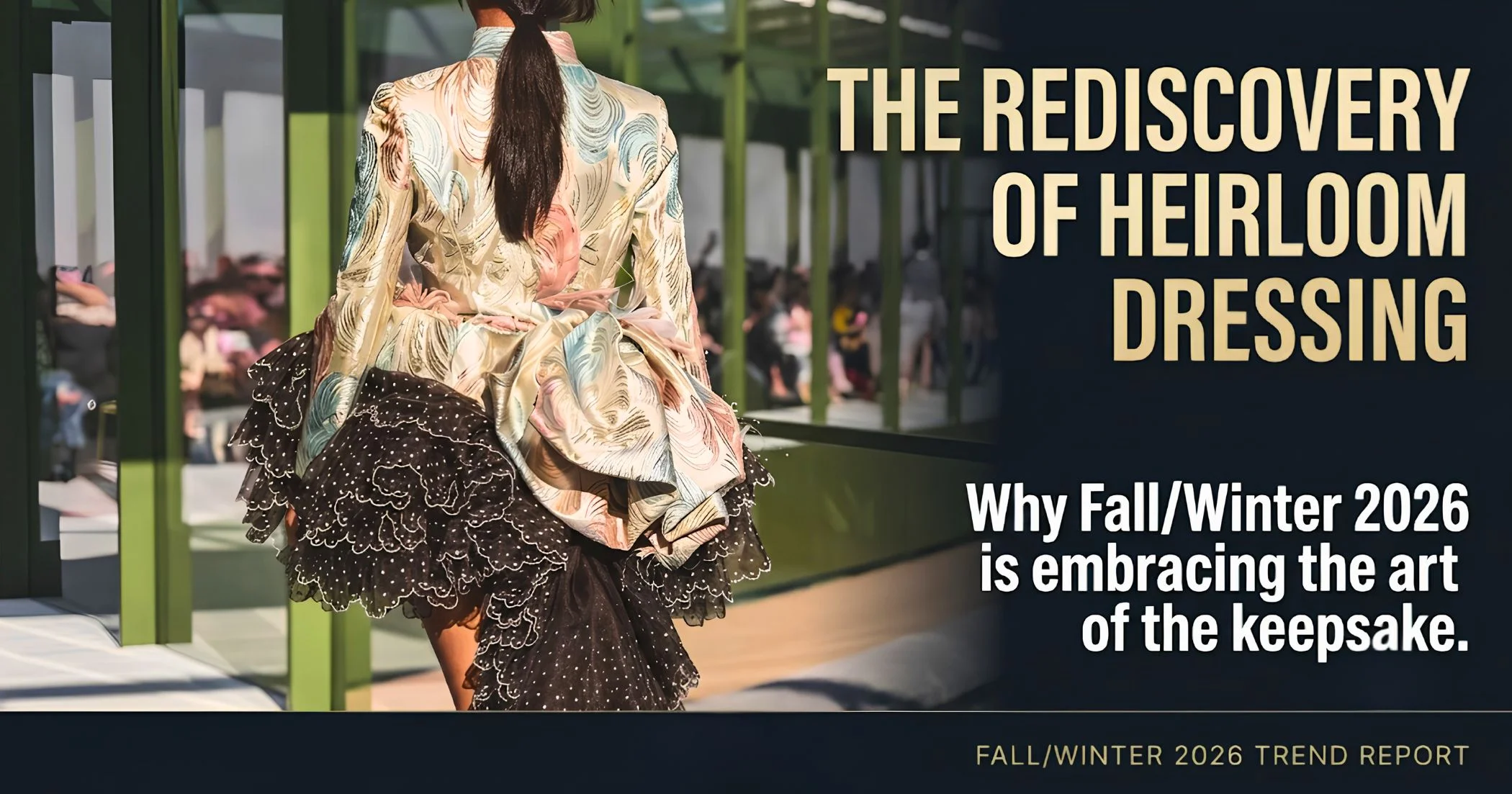

Brocade, jacquard, velvet — fabrics that used to sit in the “special occasion only” pile are back on the fall/winter 2026 runways, and not as a one-off nostalgia trip. Dior, The Row, Reem Acra, Krikor Jabotian, Gemy Maalouf — all of them leaned into heavier, old-world textiles this season instead of chasing whatever’s next. Something in fashion right now is asking a different question than usual: not what’s new, but what’s actually worth keeping.
Heritage Fabrics Return to the Runway

Dior’s metallic jacquards had that antique-tapestry look — richly embroidered jackets that wouldn’t feel out of place on a Medici portrait. The Row went a stranger route with velvet: narrow strips worked into a fluid skirt, a coat that borrowed from Tudor court dressing but didn’t try to look like a costume. Reem Acra pushed brocade into full sweeping gowns, floral patterns dense enough that they read more like textile art than something you’d wear to dinner.
Acra puts it down to fatigue — years of minimalism and casual dressing have left people wanting clothes that feel like they mean something. She says velvet, jacquard, and brocade create a richness that plainer fabrics cannot match because their luxury comes from the weave itself, not from anything added on top. While heavier heritage textiles are making a comeback, cotton and linen continue to offer a lighter alternative for everyday dressing, showing how different fabrics can serve very different style needs.
Brocade gets its raised pattern from extra threads worked into the weave itself; jacquard’s motifs come straight off the loom, built into the structure of the cloth rather than stitched on after.
Krikor Jabotian, who’s built a name blending old-world grandeur with modern tailoring, is blunter about it: these fabrics can’t be rushed, full stop. They need a skilled hand and they take time — no shortcuts. “Today, true luxury is defined by patience, narrative and time,” he says. Gemy Maalouf, working out of Beirut, echoes something similar. Her latest collection combines devoré and appliqué to make velvet gowns feel lighter, less stiff — and she thinks that’s part of why these fabrics keep pulling women back in. Wearing something that feels special, she says, still carries weight.
Key Highlights
| Detail | Information |
| Trend | Return of heritage fabrics — brocade, jacquard, velvet |
| Season | Fall/Winter 2026 collections |
| Key Designers | Dior, The Row, Reem Acra, Krikor Jabotian, Gemy Maalouf |
| Core Shift | Trend-driven dressing giving way to craft-led, lasting pieces |
| Techniques Highlighted | Brocade weaving, jacquard loom-work, devoré, appliqué |
| Consumer Driver | Craftsmanship and permanence winning out over novelty |
Working with Difficult, Historic Materials

None of this is easy to pull off. These fabrics are heavy, stiff in places, hard to cut and drape — and because they carry so much historical baggage, it’s easy for a garment to tip from couture into costume without much warning. That line is the real challenge of the season.
Acra’s answer was to keep things bold but controlled: skirt sets in metallic copper-and-turquoise brocade, 1980s-leaning off-the-shoulder gowns in heavy floral jacquard. Her approach — cleaner lines, lighter construction underneath, modern colour choices, sometimes pairing the stiff fabric with something fluid just to loosen it up. Nothing too literal, nothing too “period drama.”
Why This Matters for Fashion D2C

There’s a practical takeaway here for smaller labels. Heavy, richly woven fabric doesn’t have to mean heavy, old-fashioned shapes — pair it with a clean, contemporary cut and it reads modern instead of costume-y. That’s a formula D2C occasionwear brands can borrow without needing a couture atelier behind them.
It also says something about where spending is heading. People aren’t necessarily chasing the newest drop right now — they want something that feels considered, made to last. Brands built around craft or regional textile work have an opening here to lead with that story instead of competing purely on turnaround speed or price.
About the Designers

Reem Acra is a Lebanese-American designer based in New York, best known for eveningwear and bridal collections built around opulence. Krikor Jabotian, Armenian-Lebanese, has made his name with dramatic silhouettes rooted in traditional craft. Gemy Maalouf works out of Beirut and is known for pairing classic techniques like devoré and appliqué with contemporary shapes.
Source:
https://www.voguearabia.com/article/fashion-is-rediscovering-the-art-of-heirloom-dressing
Leave a Reply