Category: Fashion News

What’s happening in fashion right now. explained, not just reported.

  • The House of Rare Unveils Largest Bengaluru Flagship in Indiranagar

    The House of Rare Unveils Largest Bengaluru Flagship in Indiranagar

    The House of Rare Unveils Largest Bengaluru Flagship in Indiranagar

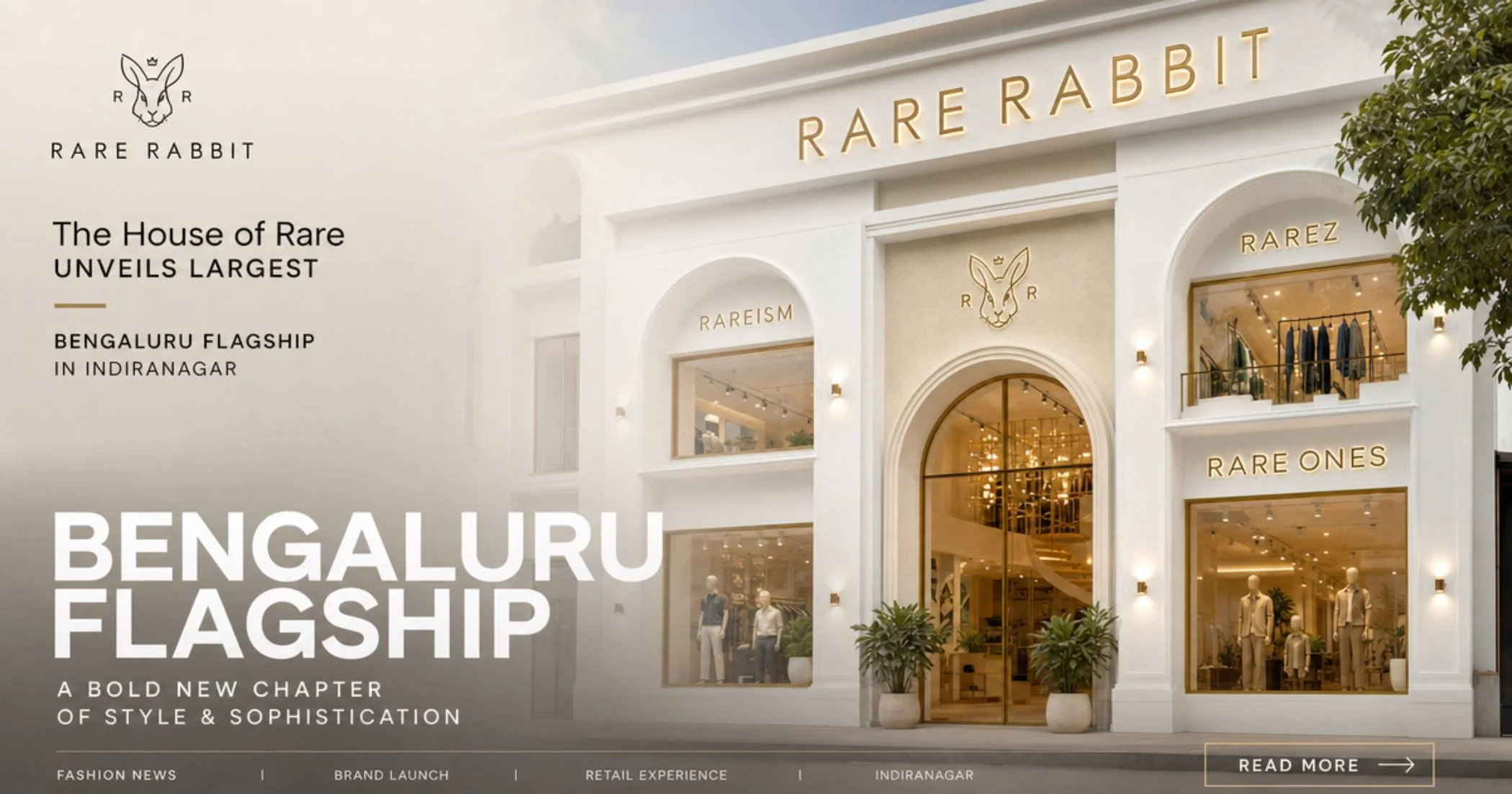
    The House of Rare has unveiled its largest Bengaluru store in Indiranagar, strengthening its retail presence in the Indiranagar flagship, an established premium high-street and lifestyle area, according to the company. The 6,000 sq. ft. flagship spans two floors and brings Rare Rabbit, Rareism, Rare Ones and Rare’Z together under one address. Franchise India reports that the opening takes the group’s Bengaluru footprint to approximately 25 stores and its India presence to approximately 42 stores. 

    What Happened?

    What Happened?

    The Indiranagar flagship brings the House of Rare portfolio together across menswear, womenswear, kidswear and footwear while allowing each label to retain its own identity. Rare Rabbit Guild anchors the menswear offer, Rareism presents its Autumn/Winter range across everyday, occasion and festive dressing, and Rare Ones adds kidswear. Rare’Z brings footwear lines including Sugoi, Dust, Montare and Abbruzzo, with the full Sugoi series making its Bengaluru debut.

    The store is also designed as part of the customer experience. Its interiors use a modern, minimal design language with veneer finishes, glass, bespoke fixtures, focused lighting and acoustic detailing. The facade draws on Mediterranean architectural references, while dedicated entrances give Rareism and Rare’Z distinct visibility within the wider format.

    Key Highlights

    Key Highlights
    • Brand: The House of Rare
    • Location: Indiranagar, Bengaluru
    • Store size: 6,000 sq. ft.
    • Format: Two-floor multi-brand flagship
    • Brands: Rare Rabbit, Rareism, Rare Ones and Rare’Z
    • Categories: Menswear, womenswear, kidswear and footwear
    • Bengaluru footprint: Approximately 25 stores
    • India footprint: Approximately 42 stores

    Why This Matters for Fashion & D2C

    Why This Matters for Fashion & D2C

    For D2C businesses, the useful lesson is about retail format rather than store count. A larger physical location needs to offer more than additional shelf space: it can bring complementary categories together, create opportunities for cross-selling and give customers a clearer understanding of a wider brand ecosystem.

    Location is equally important. The company describes Bengaluru as one of its strongest markets and Indiranagar as an established premium high-street and lifestyle ecosystem. This makes the flagship a way to deepen an existing customer base rather than entering an untested market.

    For fashion brands, the broader opportunity is to make stores and digital discovery work together rather than treating each channel independently. The physical store can provide experience and trial, while digital channels can support discovery and continued engagement. 

    About The House of Rare

    About The House of Rare

    The House of Rare was established in 2015 under the Radhamani Textiles umbrella and includes Rare Rabbit, Rareism, Rare Ones and Rare’Z. Rare Rabbit focuses on menswear, Rareism on womenswear, Rare Ones on kidswear and Rare’Z on footwear. The group says it has more than 1,100 retail touchpoints across exclusive brand stores, large-format retail and multi-brand outlets. Rare Ones and Rare’Z were launched in 2024.

    Sources Used
    1. Business Standard – The House of Rare unveils its largest Bengaluru flagship
    2. Franchise India – House of Rare Opens Its Largest 6,000 Sq. Ft. Flagship
    3. The House of Rare – Official Indiranagar Store Listing
  • Men’s Clutch Bags Move From Red Carpets To Football Pitches As A New Status Accessory

    Men’s Clutch Bags Move From Red Carpets To Football Pitches As A New Status Accessory

    Men's Clutch Bags Move From Red Carpets To Football Pitches As A New Status Accessory

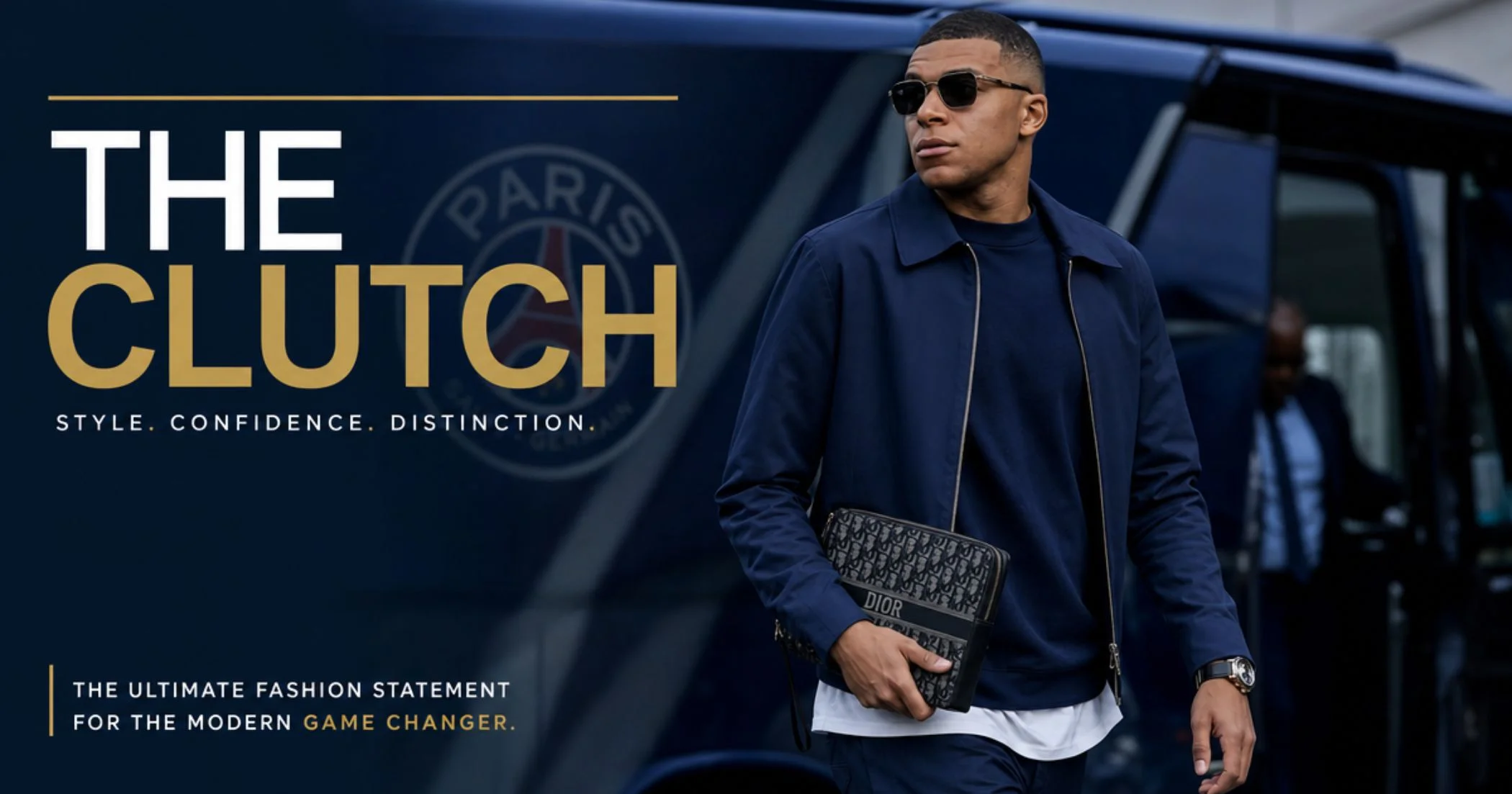
    Small clutch bags carried by men have become increasingly visible over the past several months, moving from red-carpet appearances into mainstream menswear. Harry Styles and Bad Bunny helped popularise the look in recent years, while footballers such as Kylian Mbappé and Erling Haaland brought it further into the spotlight by carrying designer clutches and bags around the 2026 FIFA World Cup in the United States, Mexico and Canada. Luxury houses including Dior, Ralph Lauren and Dolce & Gabbana have since incorporated men’s clutches into recent runway collections. 

    Celebrity Influence

    Celebrity Influence

    Men carrying small clutches at public appearances is not a new phenomenon. Harry Styles, Bad Bunny, Jacob Elordi and Patrick Schwarzenegger have carried clutches and compact bags at red-carpet events and in paparazzi photographs for several years, according to Yahoo Lifestyle. These bags typically hold only essentials such as a phone, keys and sunglasses.

    Other menswear figures have also helped popularise designer bags, including Jacob Elordi, who regularly carries Bottega Veneta pieces, and Timothée Chalamet, who has worn smaller Hermès and Chanel styles, according to CNN Style. While these celebrities did not originate the concept of men carrying bags, historically documented since the 17th century according to Coveteur, their visibility has contributed significantly to its recent resurgence.

    Footballers And Luxury Bags 

    Footballers And Luxury Bags 

    The fashion trend gained further momentum during the 2026 World Cup, as several high-profile footballers carried luxury bags and clutches. Norway striker Erling Haaland frequently carried Hermès bags, including the Birkin, while France forward Kylian Mbappé favoured Dior, reflecting his role as a brand ambassador, according to Marie Claire. Lionel Messi has also built a bag collection spanning Dior, Hermès and Louis Vuitton.

    The trend gained a stronger connection to the clutch format during the 2026 World Cup. In May, Mbappé arrived at the French national team’s training base carrying Dior’s A5 Triangle clutch, which cost approximately €1,300 (around 4,700 shekels), according to Ynetnews. During the World Cup, his France teammate Manu Koné carried a yellow Goyard clutch priced at $5,900 (approximately 17,000 shekels).

    Key Highlights

    DetailInformation
    TrendMen’s clutch bags replacing larger luxury bags
    Started ByCelebrities like Harry Styles, Bad Bunny, Jacob Elordi
    Boosted ByFootballers like Kylian Mbappé, Manu Koné, Lionel Messi
    Example PriceDior A5 Triangle clutch — about 1,300 euros
    Another ExampleGoyard clutch worn by Manu Koné — $5,900
    Brands InvolvedDior, Hermès, Louis Vuitton, Goyard, Dolce & Gabbana, Ralph Lauren
    Key ThemeClutches functioning as style and status accessories over daily utility

    Runway And Brand Adoption

    Runway And Brand Adoption

    Luxury houses have responded to the visibility of this trend with recent runway presentations. Dolce & Gabbana paired suits and resort wear with clutches, including styles decorated with jeweled charms and others in crocodile-effect leather. Ralph Lauren presented tailored suits alongside leather clutches in a range of sizes, using the accessory to introduce a more relaxed element into formal looks.

    Reporting also notes a related trend of men repurposing toiletry bags as day bags, with the distinction between the two categories increasingly blurred in practice.

    Why This Matters for Fashion D2C

    Why This Matters for Fashion D2C

    This shift indicates that established assumptions about “practical” or category-appropriate menswear accessories are loosening. Crossbody bags and belt bags have traditionally been positioned as the safer entry point for men’s bag categories; clutches are now competing for that space. Brands developing men’s accessory lines may want to track this shift in consumer acceptance.

    There is also a pricing pattern worth noting. Within luxury houses, clutches typically sit at a lower price point than larger handbags from the same brand, offering a comparatively accessible entry into a “luxury” positioning. D2C accessory brands could apply a similar structure — smaller, design-forward items priced to make a brand’s aesthetic accessible without requiring a flagship-price purchase.

    Style Over Functionality

    Style Over Functionality

    Clutches present clear functional limitations compared to crossbody or belt bags. They occupy one hand, requiring users to set the bag down for tasks such as using a phone, and do not distribute weight the way structured bags do.

    This trade-off appears to be part of the accessory’s current appeal rather than an obstacle to it. Reporting on the trend frames clutches, whether from established luxury houses or resale/counterfeit markets, as functioning primarily as status and style signifiers rather than practical daily-carry items. The format’s growing adoption suggests that, within this segment of menswear, visual and brand signalling is currently being prioritised over functional convenience.

    Source:

    https://www.ynetnews.com/culture/lifestyle/article/r1py11hkyfg

  • Theatre Brand Raised Funding: D2C Label Theater Bags Rs 75 Crore In Series A Led By Niveshaay

    Theatre Brand Raised Funding: D2C Label Theater Bags Rs 75 Crore In Series A Led By Niveshaay

    Theatre Brand Raised Funding: D2C Label Theater Bags Rs 75 Crore In Series A Led By Niveshaay

    Theater, a D2C fashion and accessories brand, has raised Rs 75 crore in a Series A funding round led by Niveshaay. Physis Capital joined as a new investor, while Prath Ventures, an existing investor, also participated. The round values Theater at approximately Rs 410 crore on a post-money basis.

    Theater’s Funding Round

    Theater's Funding Round

    Theater makes footwear, stockings, bags, and perfumes. Four people started the brand in 2021. Their names are Sarthak Aggarwal, Vikram Jain, Karan Jain, and Shruti Aggarwal. The brand calls itself “design-led” and “mass-premium.” That means it sits between cheap mass-market goods and pricey imported luxury brands.

    The company plans to use the funds to expand its offline retail footprint and invest in brand-building initiatives, including marketing campaigns and celebrity partnerships. Theater currently operates primarily through digital channels, but intends to grow its physical retail presence significantly.

    Sarthak Aggarwal, co-founder and CEO, explained the reasoning behind the brand’s founding. He said the team struggled to find well-made accessories in India that weren’t either imported luxury items or lower-quality alternatives, prompting them to build a brand manufactured in India and priced for consumers who value design without paying luxury prices.

    Co-founder Vikram Jain addressed a common assumption in the Indian retail market. He noted that Indian consumers are frequently characterised as prioritising discounts over design. However, he said Theater’s growth suggests otherwise, indicating that consumers are willing to pay for products with a distinct design perspective.

    Theatre Brand Raised Funding

    Arvind Kothari, Founder of Niveshaay, explained the rationale behind the investment. He said Niveshaay backs category-creating brands that address clear market gaps, noting that footwear, stockings, and bags remain largely unorganised categories in India with limited design-led options. Kothari added that Theater built strong consumer pull organically in these categories.

    The company’s financial performance supports this positioning. Theater recorded operating revenue of Rs 33.35 crore in the financial year ending March 2025, representing a 2.37x year-on-year increase. The brand’s previous funding round was a $1.5 million pre-Series A round led by Prath Ventures in September 2024.

    Key Highlights

    DetailInformation
    BrandTheater
    RoundSeries A
    Amount RaisedRs 75 crore
    Led ByNiveshaay
    Other InvestorsPhysis Capital (new), Prath Ventures (existing)
    ValuationAbout Rs 410 crore (post-money)
    Founded2021, by Sarthak Aggarwal, Vikram Jain, Karan Jain, Shruti Aggarwal
    ProductsFootwear, stockings, bags, perfumes
    FY25 RevenueRs 33.35 crore, up 2.37x from FY24
    Past Round$1.5 million pre-Series A, led by Prath Ventures, September 2024

    Why This Matters for Fashion D2C

    Why This Matters for Fashion D2C

    Theater’s growth suggests increasing consumer willingness to pay for design-led products at accessible price points, rather than defaulting to discount-driven purchasing.

    The funding also highlights growing opportunities in underpenetrated fashion-accessory categories. Footwear, stockings, and bags have historically lacked strong design-focused, organised players in India, and Theater’s traction indicates demand exists in these overlooked segments.

    This may prompt other D2C brands to consider less saturated categories rather than competing directly in crowded segments such as apparel, where differentiation is harder to achieve.

    About Theater

    About Theater

    Theater was founded in 2021 by Sarthak Aggarwal, Vikram Jain, Karan Jain, and Shruti Aggarwal. The brand manufactures footwear, stockings, bags, and perfumes, and positions itself as a design-led, mass-premium label priced above mass-market offerings but below imported luxury brands.

    What Happens Next?

    What Happens Next

    Theater plans to use the new capital to expand its offline retail presence and increase investment in marketing and celebrity partnerships, while continuing to grow its digital-first business.

    Source: https://indianstartupnews.com/funding/fashion-brand-theater-raises-rs-75-crore-in-series-a-funding-led-by-niveshaay-12515182 

    https://retail.economictimes.indiatimes.com/news/apparel-fashion/accessories/theater-raises-rs-75-crore-in-series-a-funding-led-by-niveshaay/134003146

  • Fashion Is Rediscovering the Art of Heirloom Dressing

    Fashion Is Rediscovering the Art of Heirloom Dressing

    Fashion Is Rediscovering the Art of Heirloom Dressing

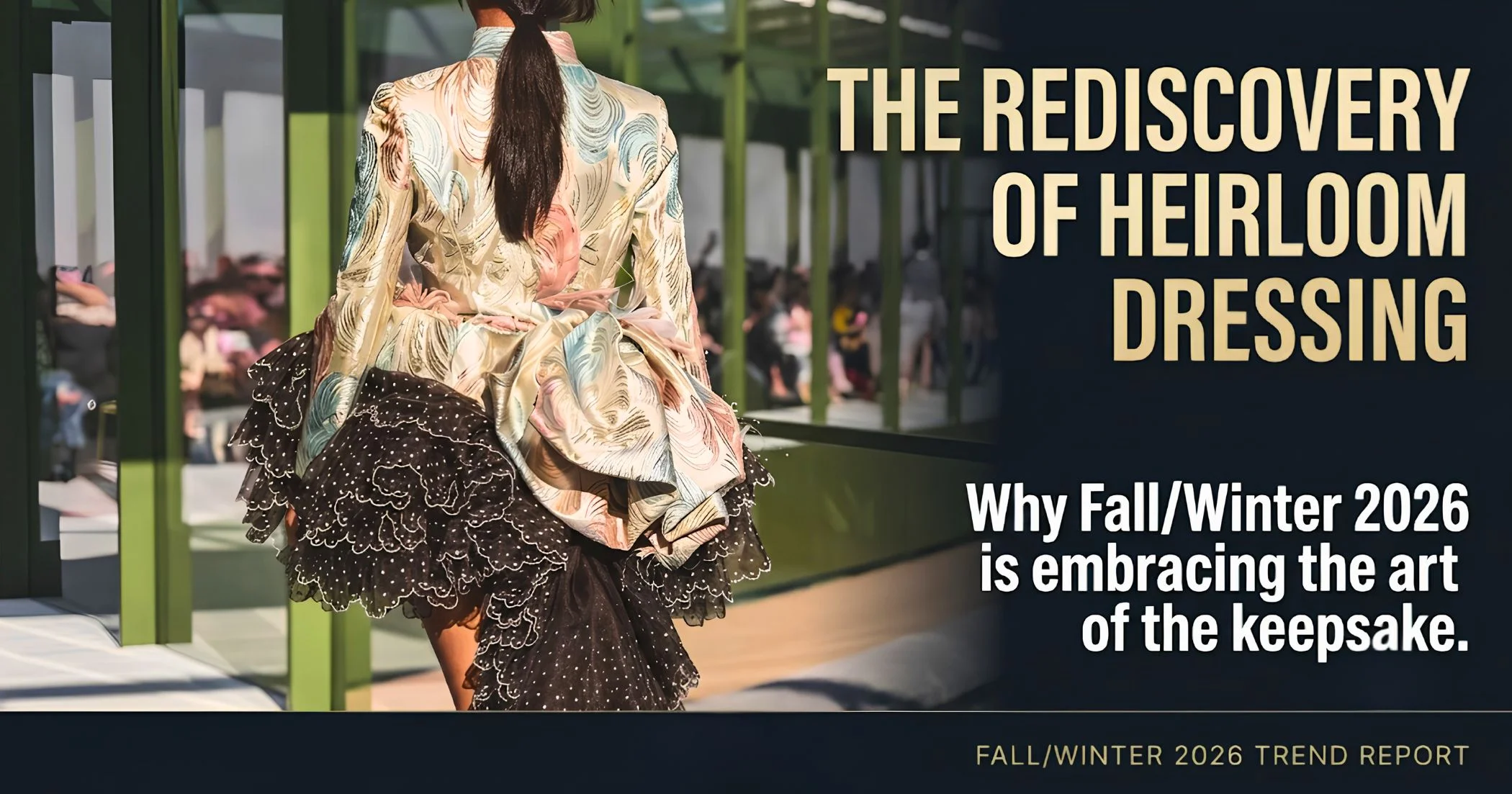
    Brocade, jacquard, velvet — fabrics that used to sit in the “special occasion only” pile are back on the fall/winter 2026 runways, and not as a one-off nostalgia trip. Dior, The Row, Reem Acra, Krikor Jabotian, Gemy Maalouf — all of them leaned into heavier, old-world textiles this season instead of chasing whatever’s next. Something in fashion right now is asking a different question than usual: not what’s new, but what’s actually worth keeping.

    Heritage Fabrics Return to the Runway

    Heritage Fabrics Return to the Runway

    Dior’s metallic jacquards had that antique-tapestry look — richly embroidered jackets that wouldn’t feel out of place on a Medici portrait. The Row went a stranger route with velvet: narrow strips worked into a fluid skirt, a coat that borrowed from Tudor court dressing but didn’t try to look like a costume. Reem Acra pushed brocade into full sweeping gowns, floral patterns dense enough that they read more like textile art than something you’d wear to dinner.

    Acra puts it down to fatigue — years of minimalism and casual dressing have left people wanting clothes that feel like they mean something. She says velvet, jacquard, and brocade create a richness that plainer fabrics cannot match because their luxury comes from the weave itself, not from anything added on top. While heavier heritage textiles are making a comeback, cotton and linen continue to offer a lighter alternative for everyday dressing, showing how different fabrics can serve very different style needs.

    Brocade gets its raised pattern from extra threads worked into the weave itself; jacquard’s motifs come straight off the loom, built into the structure of the cloth rather than stitched on after.

    Krikor Jabotian, who’s built a name blending old-world grandeur with modern tailoring, is blunter about it: these fabrics can’t be rushed, full stop. They need a skilled hand and they take time — no shortcuts. “Today, true luxury is defined by patience, narrative and time,” he says. Gemy Maalouf, working out of Beirut, echoes something similar. Her latest collection combines devoré and appliqué to make velvet gowns feel lighter, less stiff — and she thinks that’s part of why these fabrics keep pulling women back in. Wearing something that feels special, she says, still carries weight.

    Key Highlights

    DetailInformation
    TrendReturn of heritage fabrics — brocade, jacquard, velvet
    SeasonFall/Winter 2026 collections
    Key DesignersDior, The Row, Reem Acra, Krikor Jabotian, Gemy Maalouf
    Core ShiftTrend-driven dressing giving way to craft-led, lasting pieces
    Techniques HighlightedBrocade weaving, jacquard loom-work, devoré, appliqué
    Consumer DriverCraftsmanship and permanence winning out over novelty

    Working with Difficult, Historic Materials

    Working with Difficult, Historic Materials

    None of this is easy to pull off. These fabrics are heavy, stiff in places, hard to cut and drape — and because they carry so much historical baggage, it’s easy for a garment to tip from couture into costume without much warning. That line is the real challenge of the season.

    Acra’s answer was to keep things bold but controlled: skirt sets in metallic copper-and-turquoise brocade, 1980s-leaning off-the-shoulder gowns in heavy floral jacquard. Her approach — cleaner lines, lighter construction underneath, modern colour choices, sometimes pairing the stiff fabric with something fluid just to loosen it up. Nothing too literal, nothing too “period drama.”

    Why This Matters for Fashion D2C

    Why This Matters for Fashion D2C

    There’s a practical takeaway here for smaller labels. Heavy, richly woven fabric doesn’t have to mean heavy, old-fashioned shapes — pair it with a clean, contemporary cut and it reads modern instead of costume-y. That’s a formula D2C occasionwear brands can borrow without needing a couture atelier behind them.

    It also says something about where spending is heading. People aren’t necessarily chasing the newest drop right now — they want something that feels considered, made to last. Brands built around craft or regional textile work have an opening here to lead with that story instead of competing purely on turnaround speed or price.

    About the Designers

    About the Designers

    Reem Acra is a Lebanese-American designer based in New York, best known for eveningwear and bridal collections built around opulence. Krikor Jabotian, Armenian-Lebanese, has made his name with dramatic silhouettes rooted in traditional craft. Gemy Maalouf works out of Beirut and is known for pairing classic techniques like devoré and appliqué with contemporary shapes.

    Source:

    https://www.voguearabia.com/article/fashion-is-rediscovering-the-art-of-heirloom-dressing

    https://lereussi.com/blogs/magazine/the-heirloom-wardrobe-creating-a-legacy-through-style?srsltid=AfmBOopvuF7mwtTCzjFj_-Cp6iomALHf6GYg_Bhq4hK5Fgg4ab9HlevQ

  • Isha Ambani’s 450-Hour Zardozi Look at Abu Jani Sandeep Khosla’s 40th Anniversary

    Isha Ambani’s 450-Hour Zardozi Look at Abu Jani Sandeep Khosla’s 40th Anniversary

    Isha Ambani’s 450-Hour Zardozi Look at Abu Jani Sandeep Khosla’s 40th Anniversary

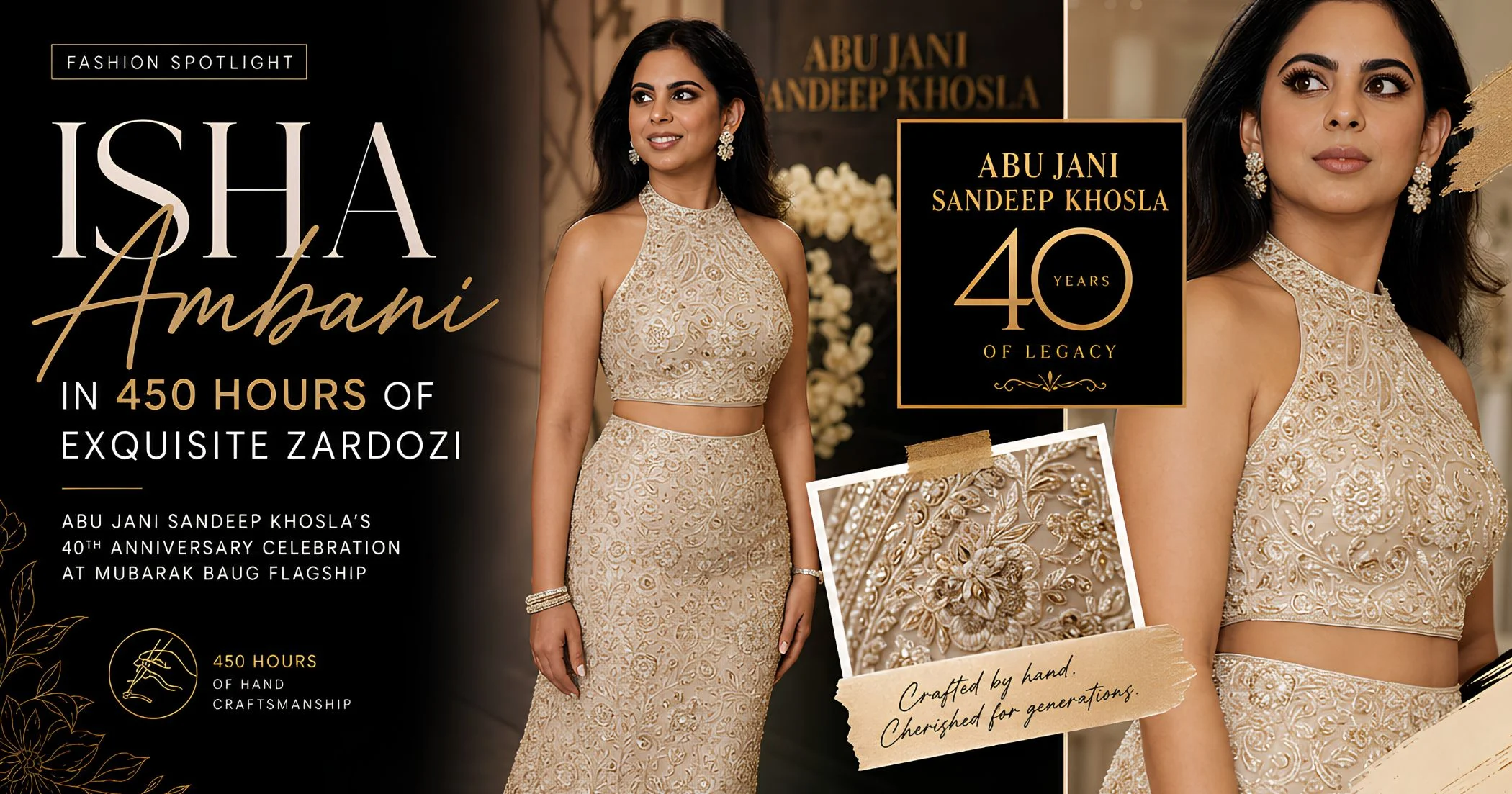
    Abu Jani and Sandeep Khosla marked 40 years of fashion with a grand celebration in Mumbai. The event brought together stars, models, and long-time friends of the designers. Isha Ambani attended the celebration in a custom zardozi skirt set that took nearly 450 hours to make by hand. The look mixed old Indian craft with a modern shape and was part of the celebrations around the designers’ new flagship, Mubarak Baug.

    Abu Jani Sandeep Khosla’s 40th Anniversary Celebration

    Abu Jani Sandeep Khosla’s 40th Anniversary Celebration

    Abu Jani and Sandeep Khosla’s 40th anniversary celebration brought their four-decade fashion journey into one big event. The celebration took place at Mubarak Baug, their new flagship in South Mumbai, inside the historic Framjee Cawasjee Institute.

    The space was made to show the world of the designers. It brings together couture, craft, art, jewellery, and pieces from their past. The new flagship covers about 20,000 square feet and was designed as an immersive space rather than a simple fashion store.

    The event had many well-known names from Indian fashion and film. Nita Ambani, Isha Ambani, Shloka Ambani, and Radhika Ambani attended the celebration in looks by the designers. Models who had worked with the duo in the past returned for the show, adding a special link to the brand’s history.

    Key Highlights

    DetailInformation
    EventAbu Jani Sandeep Khosla’s 40th anniversary celebration
    VenueMubarak Baug, Mumbai
    DesignersAbu Jani and Sandeep Khosla
    Isha Ambani’s LookCustom zardozi-embroidered skirt set
    Craft TimeNearly 450 hours
    Main CraftAari and zardozi embroidery
    Design DetailMughal-inspired jaali motif
    StylistAndrew Mukamal
    JewelleryFrom Nita Ambani’s personal collection

    Isha Ambani’s 450-Hour Zardozi Skirt Set

    Isha Ambani wore a custom skirt set made by Abu Jani Sandeep Khosla for the celebration. The outfit had a fitted halterneck blouse and a long skirt with rich embroidery.

    The piece was made new for the event. It was not an old look from the designers’ archive. The handwork took close to 450 hours, with the outfit made over about six weeks.

    The set used a Mughal-inspired jaali design. Artisans covered the fabric with aari and zardozi work. Swarovski crystals, pearls, and bugle beads added more shine to the look.

    The halterneck gave the outfit a fresh feel. Its clean shape brought a light, modern touch to the heavy handwork. The result was closer to elegant eveningwear than a traditional lehenga.

    The Craftsmanship Behind Isha Ambani’s Look

    The Craftsmanship Behind Isha Ambani’s Look

    The main beauty of the outfit comes from its handwork. Artisans used aari and zardozi to create the detailed patterns across the skirt and blouse.

    The jaali motif has a strong Mughal influence. It looks like a fine, open pattern and gives the outfit a rich texture.

    The motif also has a history with the fashion house. A similar jaali design appeared in the brand’s 2009 Abaan collection. The new look takes ideas from the designers’ Raj collection too, giving an older craft a newer feel.

    How Isha Ambani Styled the Look

    How Isha Ambani Styled the Look

    Stylist Andrew Mukamal styled Isha’s look. He kept the accessories polished so they did not take attention away from the detailed embroidery.

    Isha wore a diamond and pearl choker, statement diamond earrings, and a diamond-encrusted ring. The jewellery came from Nita Ambani’s personal collection.

    She finished the look with crystal-covered heels from Italian brand René Caovilla and a metallic chainmail top-handle bag.

    Why This Matters for Fashion D2C

    Isha Ambani’s look shows how Indian craft can work with a modern fashion shape. The outfit keeps traditional zardozi and aari work at the centre, but the clean halterneck and long skirt give it a fresh evening look.

    This is useful for fashion D2C brands, especially those making wedding and occasion wear. Customers are looking for special pieces that feel rich but do not always look like a classic lehenga. A simple shape with detailed handwork gives brands another way to create statement occasionwear.

    The event itself gives another lesson. Mubarak Baug is more than a store. It brings fashion, craft, art, jewellery, and the brand’s archive into one space. That kind of experience can help a fashion label tell a stronger story around its products and its craft.

    About Abu Jani Sandeep Khosla

    Abu Jani and Sandeep Khosla began their design partnership in 1986. For four decades, they have built their name around rich Indian craft and couture. Their work is known for techniques such as zardozi, chikankari, mirror work, and detailed embroidery. Their 40th anniversary celebrates both their long journey and the craft behind the house.

    Source:

    https://www.vogue.in/content/isha-ambanis-zardozi-embroidered-skirt-set-by-abu-jani-sandeep-khosla-was-crafted-over-450-hours

    https://www.glamcheck.com/bollywood/2026/09/09/isha-ambani-zardozi-abu-jani-sandeep-khosla-450-hours