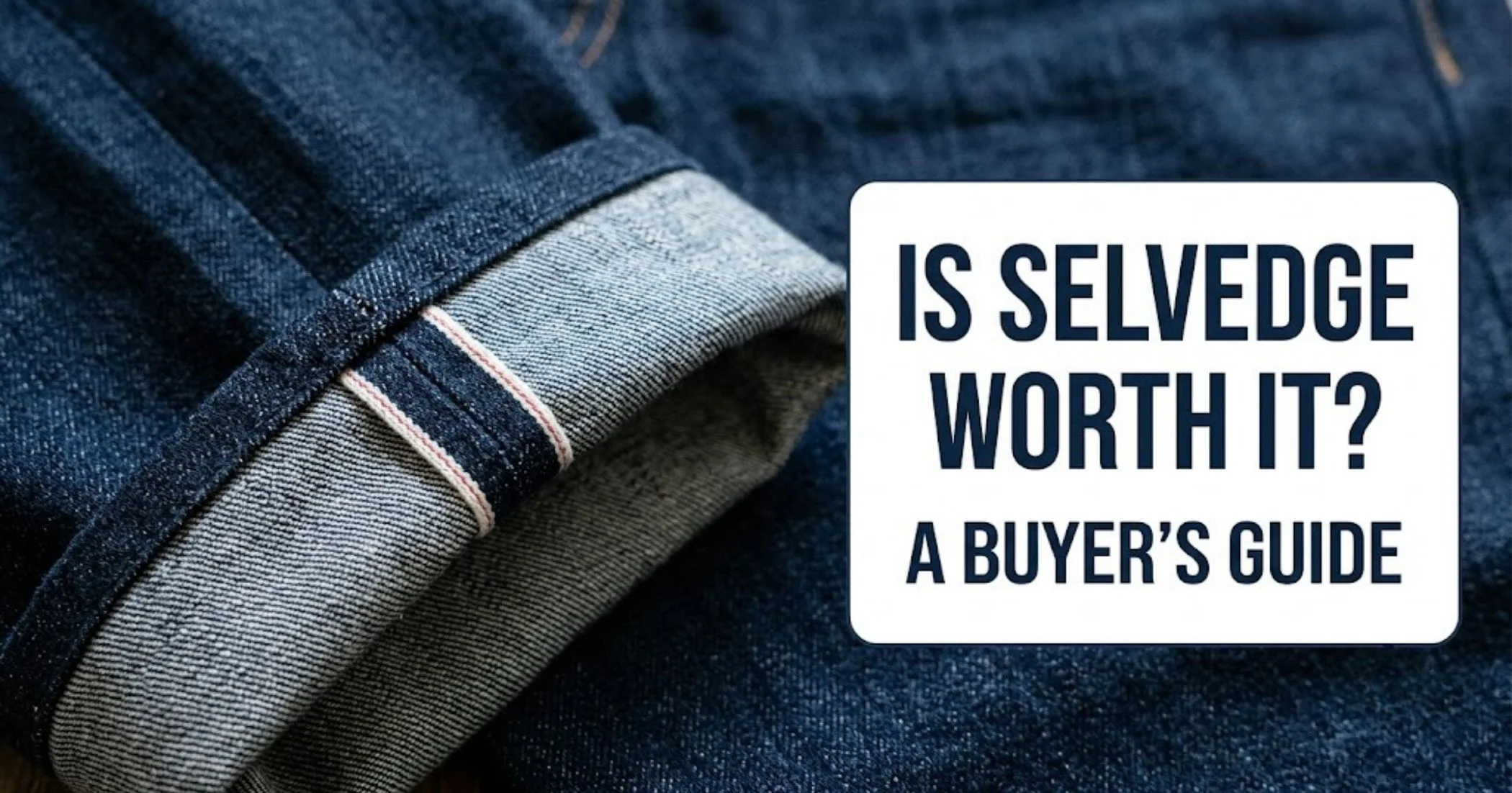

Standing in front of a rack, staring at a price tag that’s easily double what you’d normally pay for jeans, wondering if selvedge denim actually earns that jump? A lot of people land on this exact question before buying their first pair.
This guide walks through the real trade-offs, cost, comfort, durability, different denim fits, and fade quality, so you can decide for yourself rather than just trusting whatever the marketing copy tells you.
TL;DR: Is Selvedge Denim Worth Buying?
Selvedge denim is worth buying if you care about how fabric ages over time, don’t mind a stiffer break-in period, and plan to wear one pair regularly instead of rotating through several. It’s probably not worth it if you want comfortable jeans right out of the bag, since well-made premium denim without selvedge edging delivers similar durability for less money and no waiting period.
What Makes Selvedge Denim Different From Regular Denim?

The difference comes down to how the fabric gets woven, not the wash, the brand, or anything you’d notice at a glance. Selvedge denim is produced on older shuttle looms that finish each edge with a tight, self-sealed border, so the fabric never frays without extra stitching.
Standard denim comes from faster, modern looms that leave a raw edge needing separate binding. That single manufacturing difference explains most of what separates selvedge jeans from everything else on the shelf.
How a Shuttle Loom Produces Selvedge Denim
A shuttle loom weaves fabric using one continuous thread that shuttles back and forth across the width of the cloth. That back-and-forth motion naturally seals the edge, since the thread never actually breaks at the border the way it does on a modern projectile loom.
What the Selvedge Edge Tells You About the Fabric
That thin colored line running along the inside seam isn’t decoration. It marks which mill or batch produced the jean selvedge fabric, and some denim collectors track specific colors the way sneaker collectors chase certain releases. Beyond that, the edge itself signals the fabric came off a shuttle loom rather than a faster modern machine.
What Are You Paying More for With Selvedge Denim?

Cost is usually the first question people have, so it deserves a direct answer. Selvedge denim jeans typically run two to five times the price of standard denim, and that gap comes from a handful of specific factors rather than pure brand markup.
Shuttle looms run far slower than modern equipment, which drives up labor time per yard of fabric produced. The resulting fabric also comes out narrower, meaning more material gets used per pair, adding cost before a single seam gets sewn.
How Fabric Quality and Construction Affect the Price
Beyond the loom itself, a lot of selvedge jeans get produced in smaller batches instead of mass quantities. Limited runs cost more per unit to manufacture, and that expense passes straight through to the price tag you see in-store or online.
Why a Higher Price Does Not Always Mean Better Jeans
A high price doesn’t automatically guarantee superior construction. Stitching quality, fabric weight, and overall fit matter just as much as the loom type used. Plenty of well-made premium denim without any selvedge edging outperforms a poorly constructed selvedge pair on nearly every practical measure.
Is Selvedge Denim More Durable Than Regular Denim?

Honestly, durability comes down to fabric weight and how well the jeans are put together, not just whether the edge is selvedge or not. You could buy a heavy, solidly made pair of raw denim with no selvedge at all, and it’ll outlast a thin, lightweight selvedge pair without breaking a sweat.
How Denim Weight Affects Strength and Comfort:
Denim weight is measured in ounces per square yard, and honestly, this number tells you more about durability than the selvedge label ever will. Go lighter, say 10 to 12 ounces, and you get jeans that feel soft and easy right away, but they won’t hold up as long. Heavier cotton fabric, 14 ounces or more, feels stiff at first. Stick with it though, and it keeps its shape and lasts a lot longer.
Why Fit and Construction Matter for Long-Term Wear:
Stitching matters too, especially at the spots that take the most stress, like the inseam and pocket corners. It’s honestly just as important as the fabric quality itself. You can have great denim, but if the construction is weak everywhere else, the jeans will still wear out fast, no matter how nicely the edges were woven.
Are Selvedge Jeans Comfortable Enough for Everyday Wear?

Comfort is where a lot of first-time buyers get caught off guard. Most raw selvedge denim contains zero stretch, built entirely from rigid cotton with no give at all when you first pull it on.
Stretch denim, by comparison, moves with your body from the very first wear thanks to a small percentage of elastane blended into the fabric. If daily comfort ranks above fabric history on your priority list, this difference alone might answer the “worth it” question before price even enters the conversation.
Why Raw Denim Can Feel Stiff When New
That initial stiffness isn’t a flaw. It’s simply how untreated, rigid cotton behaves before it’s been worn or washed even once. Give it a few weeks of regular wear, and the fabric softens noticeably as it molds to your body, though that adjustment period is real and worth planning around.
When Stretch Denim May Be a Better Choice
If your daily routine involves a lot of movement, physical work, long commutes standing or sitting, stretch denim usually serves you better than rigid selvedge. Comfort compounds daily, while fade character only pays off after months of patient wear.
Should You Buy Raw Denim Jeans or Washed Selvedge Denim?

Not every selvedge pair arrives untreated. Plenty of brands take selvedge fabric and put it through washing and softening before it ever reaches a shelf, which changes the experience significantly compared to buying raw.
What to Expect From Raw Denim
Raw denim stays stiff, deep in color, and completely unwashed until you decide otherwise. Many enthusiasts wait months before that first wash specifically to let fade patterns develop naturally based on their own movement and habits.
Why Washed Selvedge Denim Can Be Easier to Wear
Washed selvedge still carries that signature edge detail, just without the stiff, unbroken-in feel raw denim brings. If you’re comparing different denim washes, the finish can also change how the final pair looks and feels.
Is Japanese Denim Worth Paying More For?

Not all selvedge denim jeans sit at the same price point, and that range matters when deciding what fits your budget. Japanese denim mills often produce small-batch fabric using traditional indigo dyeing techniques, and that limited production tends to push prices toward the top of the category.
What Makes Japanese Selvedge Denim Popular
Japanese selvedge denim built its reputation partly because Japan kept vintage American shuttle looms running long after most Western mills switched to faster modern equipment. That preservation shaped a whole production culture around smaller runs and specialized dye methods, though quality selvedge does come from other countries too.
How Levi’s Selvedge Compares for First-Time Buyers

Levi’s selvedge is probably the easiest entry point into this category. They run their own shuttle-loom production, but without the premium markup boutique Japanese mills tend to charge. If you’re not sure selvedge fits your lifestyle yet, starting here makes more financial sense than jumping straight to a high-end Japanese pair.
Do Selvedge Jeans Actually Develop Better Denim Fades?
Honestly, this is the strongest argument selvedge has going for it, and it holds up. Dense, tightly woven fabric takes indigo dye differently than a looser weave, creating sharper contrast between the dyed surface and the white core underneath as denim fades develop.
Those fades track your actual movement. Creases behind the knees, lightening at the pockets where your hands rest constantly, wear patterns unique to how you sit and walk each day. No two pairs age the same way, which is really the whole draw for people who deliberately avoid washing for months.
Fade quality depends heavily on fabric weight, dye method, and how consistently you wear the jeans, not just whether the edge happens to be selvedge. A lighter, poorly dyed selvedge pair can fade less dramatically than a heavier standard pair with a rich indigo base.
How Much Should You Spend on Selvedge Jeans?
Budget matters more here than most buying guides admit. Spending more doesn’t automatically buy you a better experience if comfort or low maintenance matter more to you than craftsmanship and patience.
Entry-level selvedge, brands like Levi’s, runs a bit above standard premium denim while still delivering real shuttle-loom construction. Higher-end options, especially from boutique Japanese mills, climb a lot more, mostly because of limited runs and heavier fabric weights.
Deciding between mid-range selvedge and quality premium denim without the selvedge edge? It comes down to how much you personally value that edge detail and the fade character specifically. Both deliver solid durability, so the extra cost for selvedge is really buying you those two things, not overall better quality.
How to Choose Selvedge Jeans That Suit You

Once selvedge feels like the right call for your priorities, a few practical checks make the purchase easier and cut down on buyer’s remorse.
Choose the Right Fit and Measurements
A lot of raw selvedge pairs come unsanforized, meaning they were never pre-shrunk at the mill. These can shrink up to ten percent on that first wash, so sizing up slightly and letting the fabric shrink through wear usually works better than buying something that fits perfectly off the shelf.
Consider Fabric Weight and Your Climate
Lighter weights suit warmer climates and everyday comfort. Heavier weights hold up better in cooler weather and tend to develop more pronounced fades. Match the weight to how and where you’ll actually wear the jeans, not whatever sounds most impressive on a product page.
Think About How Often You Will Wear Them

Fade development really depends on consistent wear. If a pair mostly sits in your closet, the fading slows down, and a good chunk of the whole selvedge appeal disappears with it.
Who Should Buy Mens Selvedge Jeans?
Mens selvedge jeans tend to attract a specific kind of buyer, someone who genuinely enjoys breaking in a stiff pair and watching it change over time. If that sounds like you, the investment usually pays off, both in satisfaction and in how long the jeans last.
If you wear the same pair several times a week, you’ll get the most out of selvedge construction, since frequent wear is exactly what produces those fade patterns everyone talks about.
Regular or Stretch Denim May Suit Comfort-First Buyers
If you wash your jeans often, need comfort right away for an active routine, or just want reliable basics without extra ritual, standard or stretch denim will probably serve you better. No shame in admitting selvedge just isn’t for everyone.
If you’re building a versatile everyday closet, streetwear wardrobe essentials can help you focus on practical pieces that work across different outfits.
What to Check Before Buying Selvedge Denim

Check the Denim Fabric and Construction
Don’t lean on the selvedge label alone to signal good construction. Look at fabric weight, check stitching at stress points, and get a real feel for the overall build.
Compare the Price With What You Are Actually Getting
Weigh the price against fabric weight, brand reputation, and country of production, rather than assuming a higher price automatically means better jeans.
Consider Care, Washing, and Break-In Requirements
Raw selvedge wants cold water, gentle care and washing, and air drying to protect the fade pattern. Washed versions need a lot less special care. Worth factoring that maintenance commitment in before you buy.
Conclusion
Weighing everything together, selvedge denim earns its price tag for a specific kind of buyer, not everyone shopping for jeans. If you value craftsmanship, enjoy tracking how fabric ages, and don’t mind trading immediate comfort for a longer payoff, the investment holds up well.
For anyone prioritizing comfort, low maintenance, or simply wanting solid jeans without extra thought, quality premium denim without selvedge construction delivers similar durability and looks at a friendlier price, without asking you to wait months for the fabric to feel right.
FAQs
Is selvedge denim really better quality than regular denim?
Not automatically, no. It’s woven differently, tighter weave, self-finished edge, but overall quality still comes down to fabric weight and construction, not the selvedge label alone.
How much more expensive is selvedge denim compared to regular jeans?
Typically two to five times the price of standard denim, driven by slower production, narrower fabric width, and smaller batch manufacturing runs.
Does selvedge denim come with any stretch?
Rarely. Most selvedge fabric stays rigid cotton without stretch, though a small number of brands have started blending in minimal elastane for added comfort.
Is Japanese selvedge denim always the best option?
Not necessarily the best, just often pricier because of small-batch production. Levi’s selvedge and other brands offer solid quality at more accessible price points.
How long should I wear selvedge jeans before washing them?
Many enthusiasts wait three to six months to let fade patterns develop naturally, though honestly this comes down to your own comfort with visible wear, and the smell, before that first wash.
Leave a Reply