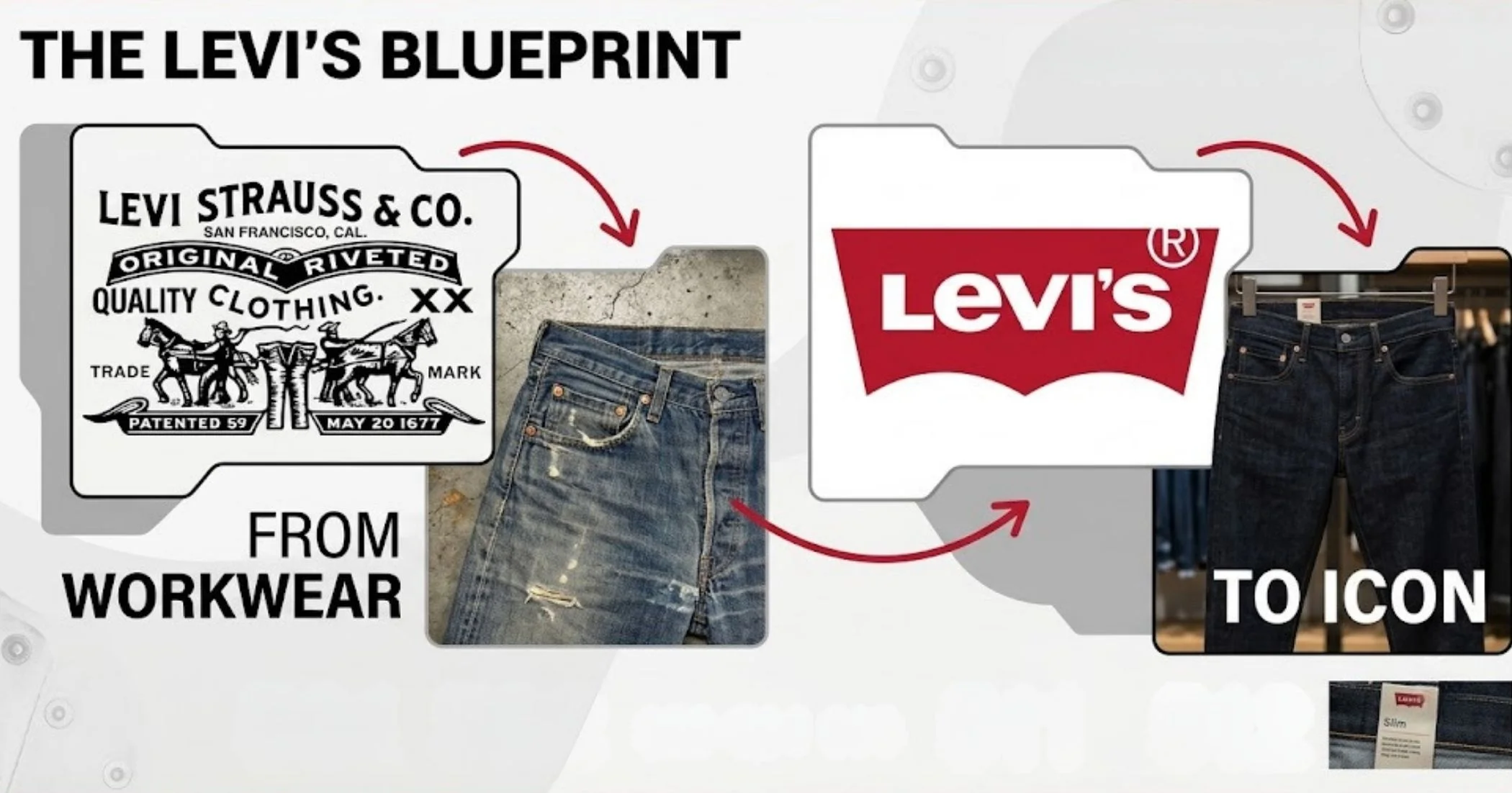

Pull up nearly any pair of jeans right now and check the fit name on the tag. Slim. Straight. Tapered. Odds are good that fit traces its roots directly back to Levi’s, a brand that didn’t just make jeans, it basically invented the language everyone in denim still uses to describe them.
This piece walks through how one company’s numbered lots turned into the blueprint the entire industry still builds on, from the original 501 through modern releases like the Ribcage Straight. Along the way, you’ll see how a single practical fix for gold rush miners eventually shaped the denim jacket in your closet and probably a pair of jeans you’re wearing right now.
TL;DR – What Made Levi’s the Blueprint for Denim
Levi’s started as workwear built for gold rush miners who needed pockets that wouldn’t tear apart under strain. That single practical fix, a copper rivet, turned into a patent, then an industry. Decades later, the numbered lots Levi’s assigned to different cuts, 501, 505, 511, 512, became the reference point every other denim brand measures their own fits against, even today.
Where It All Started – Levi Strauss and the Gold Rush Roots of Denim
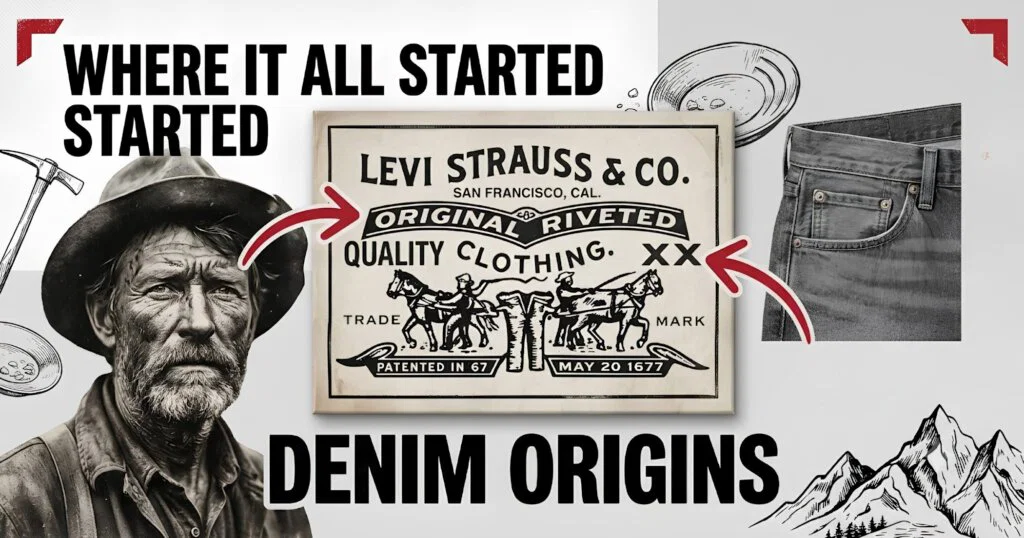
Levi Strauss arrived in San Francisco in the 1850s selling dry goods to miners flooding into California during the California gold rush. He wasn’t making jeans at first. He was selling fabric and supplies to people digging for gold in brutal, physically demanding conditions, the kind of work that chewed through ordinary clothing fast.
That environment created a real problem. Miners needed pants tough enough to survive constant crouching, digging, and rock scraping, and standard trousers at the time simply couldn’t hold up. Fabric tore, seams gave out, and pockets ripped apart under the weight of tools and ore samples. It wasn’t a fashion problem. It was a durability problem, and durability problems tend to produce practical solutions rather than stylish ones.
This is worth remembering any time Levi’s gets talked about as a fashion brand first. The company’s roots aren’t in runway trends. They’re in a very unglamorous need that had nothing to do with looking good and everything to do with clothing that could survive a workday.
The Rivet That Started Everything

The actual breakthrough didn’t come from Strauss directly. It came from a tailor named Jacob Davis, based in Nevada, who’d been reinforcing pants pockets with copper rivets after a customer asked him to make a tougher work pant for her husband. Davis had the fix. What he didn’t have was the money to file a patent on his own, so he wrote to Strauss, his fabric supplier, and proposed they patent it together.
Why Miners Needed Jeans That Wouldn’t Fall Apart
Pockets kept ripping at the corners under the weight of tools, nails, and mining equipment stuffed inside them. Regular stitching wasn’t built to handle that kind of constant strain, day after day, in rough working conditions. A pocket seam might survive a week of light use, but a miner’s pocket was getting stressed constantly, and thread alone couldn’t hold up.
Davis noticed this firsthand through his own tailoring work, watching customers come back again and again with the same torn pockets. His fix was simple: metal rivets placed directly at the stress points, doing mechanically what stitching alone couldn’t.
How a Small Patent Turned Into an Industry Standard
Davis and Strauss filed their patent on May 20, 1873, for copper rivets placed at pocket corners and points of strain. That patent effectively created the modern blue jean as a product category, not just a Levi’s product specifically, but the whole idea of riveted, durable work pants. Once the patent existed, Levi Strauss & Co. had something no competitor could legally copy, at least for a while, and that gave the company room to build a real identity around durability before anyone else could compete on the same terms.
Levi’s 501 – The Jean That Defined a Category

If one single product explains why Levi’s jeans became a household name, it’s the Levi’s 501. This isn’t just another style in the catalog. It’s the original template that nearly every straight-leg jean since has measured itself against, whether the brand making it acknowledges that lineage or not.
1890 and the Birth of Lot Number 501
The number itself comes from a simple internal lot numbering system Levi’s used for tracking different fabric bolts and cuts. Lot 501 happened to be the one that stuck, and it’s remained in continuous production since 1890, making it one of the longest-running clothing products in American history. The timing wasn’t random either. The original 1873 rivet patent expired around 1890, which meant competitors could suddenly legally copy the riveted design. Levi’s response was to lean into lot numbers as a way to distinguish its own product line from the flood of copycats entering the market.
The jean itself kept quietly evolving after that. The rivets on the back pockets, originally exposed on the outside, stayed that way until 1937, when complaints from cowboys about the metal scratching saddles and furniture forced Levi’s to move them inside. A few years later, the rivet at the crotch was removed entirely, reportedly after complaints that it heated up dangerously fast for anyone sitting too close to a campfire. Small, practical fixes like these are part of why the 501 kept working for the people actually wearing it, not just the people designing it.
What Makes the 501 Fit Different From Other Straight Jeans
The Levi’s 501 sits at the natural waist with a straight leg that doesn’t taper or flare dramatically anywhere along its length. That neutral, uncomplicated silhouette is exactly why it became the reference point other brands still describe their own straight-leg cuts against, even decades later. It doesn’t chase a specific era’s idea of what looks good, which is part of why it hasn’t aged out the way more trend-driven fits eventually do.
Why the 501 Still Sells Decades Later
Trends shift constantly in fashion, but the 501 keeps selling because it never tried to chase any of them specifically. It’s a timeless, versatile fit that works across generations, which explains why you’ll spot the same style on teenagers and their grandparents alike.
How Levi’s Shaped the Way We Think About Denim Fit

Once the straight leg was established, Levi’s expanded the lineup with different cuts designed to serve different body types and style preferences, effectively building the vocabulary the entire industry now uses. Instead of describing fits in vague terms, the brand gave shoppers actual numbers to reference, and that habit stuck well beyond Levi’s own product lines.
Levi’s 511 and the Rise of the Slim Fit Era
Levi’s 511 arrived as a response to the slim-fit trend that swept through menswear, offering a leg that sits closer to the body without going full skinny. This fit became hugely popular for Levi jeans for men who wanted something more tailored than the classic straight leg, without going all the way to the tighter cuts other brands were pushing at the same time.
Levi’s 505 and the Straight Leg That Never Left
The Levi’s 505 sits in an odd middle spot, not quite the 501, not quite one of the slimmer cuts either. It’s got a straight leg, sure, but the rise and overall fit feel a touch more modern than the original. Honestly, that’s probably why it’s stuck around this long. It doesn’t fully commit to classic or contemporary, so it works as a safe pick for anyone who’s not sure which fit to grab first.
Levi’s 512 and Where Slim Taper Fits Into the Lineup
The Levi’s 512 does something the 501 and 505 don’t bother with, it tapers. The leg narrows gradually as it moves from the thigh down toward the ankle instead of staying the same width the whole way. Good option if you want a slimmer look near your ankles but still want some breathing room up top.
Levi’s Beyond Jeans – The Trucker Jacket and Everyday Casual Wear

Jeans built the Levi’s name, but the brand didn’t stop there. Casual wear and everyday denim pieces became a big part of the story too. These pieces also helped shape the kind of practical, versatile clothing that later became central to modern streetwear wardrobes.
That same idea behind the 501, durability over flash, carries straight through into everything else they make.
How the Trucker Jacket Became a Wardrobe Staple
The trucker jacket followed roughly the same arc as the 501. Started off as tough workwear, eventually turned into something people just wanted to wear because it looked good. Levi’s was making denim jackets as far back as the 1880s, and collectors today still label them using the same Type I, Type II, Type III system the brand came up with. Type III is basically what everyone calls a trucker jacket now. That kind of versatility is exactly what makes a piece valuable when building a capsule wardrobe. Plenty of women reach for it just as often as men do too.
How Levi’s Shirts Became a Staple of Everyday Casual Wear
Button-down shirts came next, along with other denim pieces built with that same no-nonsense, built-to-last mindset their jeans always had. Together, these pieces rounded out a whole casual wardrobe built around denim as a fabric, not just something you wear on your legs. What started as rugged Western wear for cowboys eventually became something people just liked wearing, because it looked good and lasted.
How Levi’s Keeps Its Denim Relevant in Modern Fashion

Lasting 150-plus years takes more than resting on old reputation. Levi’s kept rolling out fits that respond to whatever’s trending at the moment, while somehow never losing what makes them recognizably Levi’s.
Where Levi’s Ribcage Straight Fits Into the Current Denim Trend
The Ribcage Straight is Levi’s answer to the recent pull toward higher rises and looser, straighter legs, a look that’s basically taken over women’s denim the past few years. It’s the same straight-leg thinking from the 501, just reshaped for a completely different silhouette, without losing the appeal that made the original work in the first place.
Levi’s Cargo Pants and the Brand’s Move Into Streetwear
Cargo pants are the newest move, mixing Levi’s usual fabric know-how with the utility-heavy look streetwear has leaned into hard lately. It’s a real step outside straight and slim jeans, into space that other denim brands have owned for a while now.
Why Levi’s Still Sets the Standard for Denim Style

Brands come and go in denim, that’s nothing new. American Eagle and plenty of others have built whole product lines on fits Levi’s was doing decades before them, whether that’s a straight trouser cut or a slim taper leg. Newer brands can absolutely make solid jeans, sure, but they’re still building inside a framework Levi’s put down generations back.
A lot of that staying power actually traces back to right after World War II, when jeans stopped being purely functional and turned into something closer to a symbol of youth pushing back against convention. Marlon Brando, James Dean, both wore Levi’s on screen through the 1950s, and that image stuck. Denim wasn’t just something you wore because you had to anymore. People started choosing it.
And it’s not just nostalgia keeping Levi’s relevant today either. Their numbering system, 501, 505, 511, 512, turned into shorthand the whole industry picked up, even brands that use totally different naming systems for their own similar fits.
The Bottom Line: Levi’s Didn’t Just Sell Jeans, It Built the Category

From that original rivet patent all the way to newer releases like the Ribcage Straight, Levi’s didn’t just show up and participate in denim as a category. They built the category, more or less from nothing, then kept growing it decade after decade without ever losing the thread back to that very first pair of riveted work pants.
Next time you put on jeans, doesn’t matter if they’re actually Levi’s or some other brand entirely, you’re wearing something shaped by decisions this one company made well over a century ago. Kind of a strange legacy for a brand that started out just trying to stop a miner’s pocket from ripping.
Levi’s helped turn denim from practical workwear into an everyday fashion staple, a shift that continues to shape denim and streetwear fashion today.
FAQs
Been in continuous production since 1890. That makes it one of the longest-running clothing products in American manufacturing history.
The 511 keeps a consistent slim fit down the whole leg. The 512 tapers instead, narrowing gradually from thigh to ankle for a slightly more fitted look.
Gold rush miners needed pockets tough enough to hold tools and equipment without ripping apart at the seams under constant strain.
Not quite. It’s got a similar straight leg to the 501, but the rise and fit lean a bit more modern overall.
Built for the high-rise, looser straight-leg trend that’s taken over women’s denim lately. Sits higher on the waist than most traditional straight-leg cuts do.